

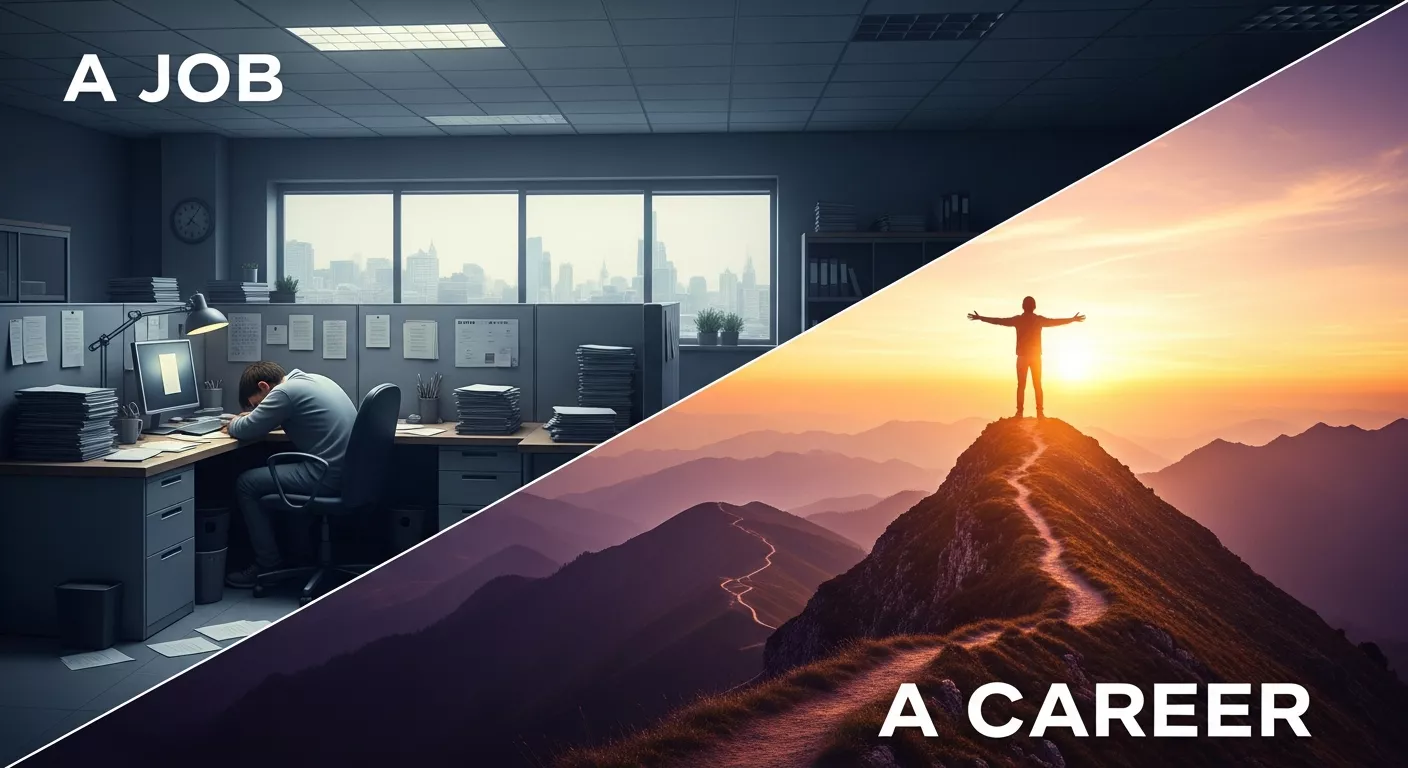
A job focuses on short-term income and stability, while a career emphasizes long-term growth, purpose, and skill development. Understanding this difference helps individuals align their work choices with personal goals, financial needs, and desired lifestyle.
Many people use the words “job” and “career” interchangeably. You might hear someone say they are looking for a new job, while someone else talks about advancing their career. While both involve working to earn money, the underlying mindset, commitment, and long-term trajectory are entirely different.
Understanding this distinction is crucial for your professional development. It changes how you approach your daily tasks, how you plan for the future, and how you evaluate your current employment situation. If you feel stuck in your current role or are unsure about your next professional move, clarifying what you actually want—a steady job or a long-term career—can provide immediate clarity.
What Exactly is a Job?

A job is primarily a transactional agreement. You provide your time, labour, and skills, and in return, your employer pays you a specific wage or salary. The main objective of a job is to earn an income to support your lifestyle, pay your bills, and meet your immediate financial needs.
Characteristics of a Job
Jobs often come with a defined set of responsibilities and a fixed schedule. When you clock out at the end of the day, your work usually stays at the workplace. The focus is short-term. You might take a job to get through college, to save up for a specific purchase, or simply to make ends meet while you figure out your next steps.
Because the primary motivation is financial, people often change jobs frequently. If another company offers a slightly higher hourly wage or a more convenient schedule, leaving a current job for a new one is an easy decision. There is usually minimal emotional investment in the company’s long-term success.
The Value of Having a Job
There is absolutely nothing wrong with having a job. In fact, jobs offer excellent flexibility. They allow you to prioritise other areas of your life, such as family, hobbies, or education, without the heavy mental burden often associated with career advancement. Jobs teach basic professional skills like punctuality, teamwork, and customer service. They provide stability and immediate financial relief when you need it most.
What is a Career?
A career is a long-term professional journey. It is a series of connected employment opportunities, roles, and experiences that build upon one another to help you achieve your ultimate professional goals. Unlike a job, a career is often tied to your passions, interests, and personal identity.
Characteristics of a Career
When you have a career, you are focused on growth. You actively seek out opportunities to learn new skills, take on leadership roles, and expand your professional network. Income is certainly important, but it is not the only driving factor. You are willing to accept lateral moves or even temporary pay cuts if it means gaining valuable experience that will pay off later.
Careers require significant investment. This often means pursuing higher education, obtaining specialized certifications, or spending unpaid hours networking and developing your craft. The work often follows you home. Because you are emotionally invested in your professional growth and the impact of your work, the boundary between your personal and professional life can sometimes blur.
Building Professional Momentum
A career is built on momentum. Each position you hold serves as a stepping stone to the next. You build a reputation within your industry. Your network grows, and your earning potential increases exponentially as you gain specialized expertise. Employers value career-minded individuals for their strategic thinking, dedication, and a desire to contribute to the company’s broader mission.
Key Differences Between a Job and a Career
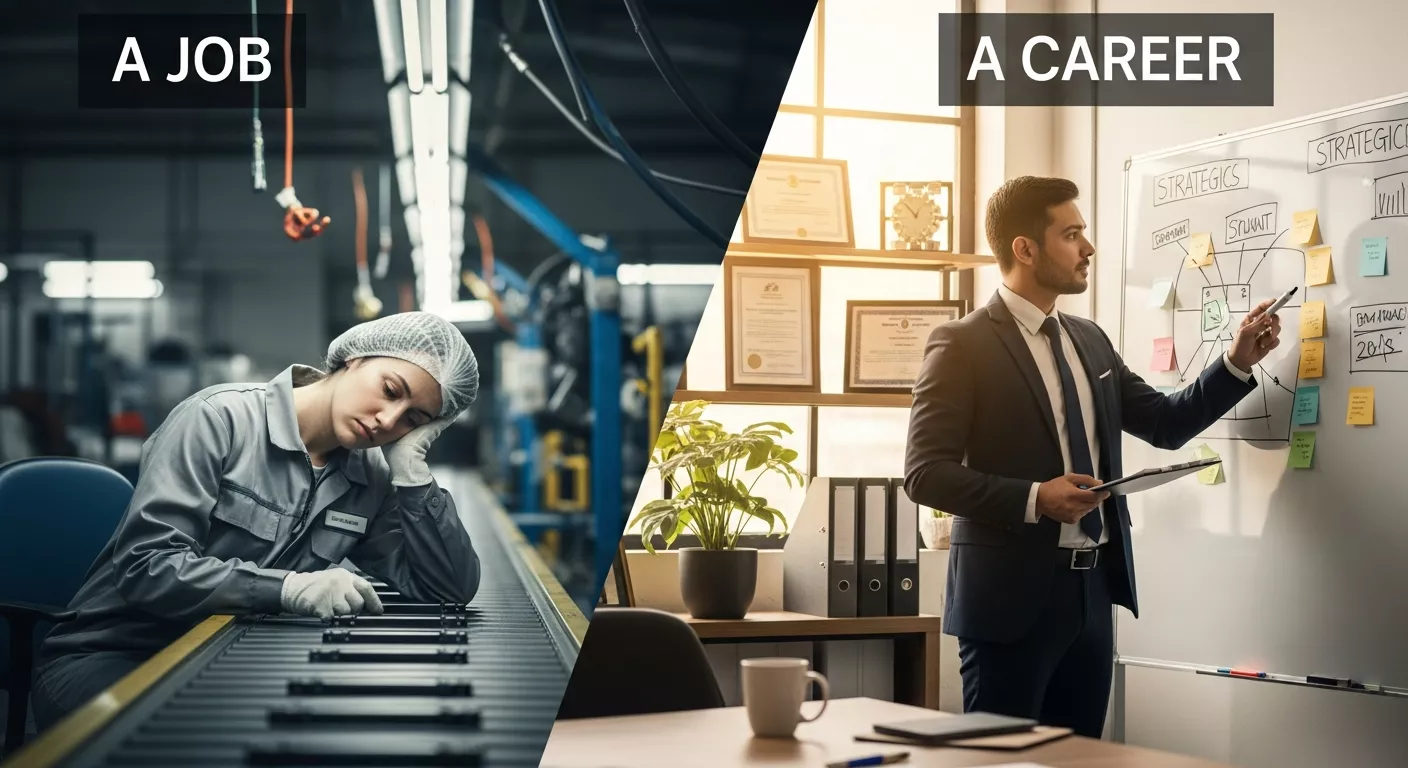
To truly understand the difference between a job and a career, it helps to look at a few specific points of comparison.
The Time Horizon
A job operates on a short-term timeline. You think about the next paycheck, the upcoming weekend, or your schedule for the next month. A career requires long-term thinking. You plan in terms of years or decades. You ask yourself where you want to be in five years and what steps you need to take today to get there.
Skill Development and Education
In a job, you learn the specific skills required to perform your immediate duties. Once you master those, your learning might plateau. In a career, learning is continuous. You are expected to stay updated on industry trends, learn new software, develop soft skills like negotiation and public speaking, and constantly adapt to an evolving market.
Financial Trajectory
Jobs typically offer linear income growth. You might receive standard annual raises or small bumps in pay for tenure. Careers offer exponential income growth. As you move from entry-level to management, and eventually to executive or highly specialized roles, your compensation increases significantly to reflect your rare skill set and experience.
Emotional Investment
If you have a bad day at a job, you can usually shrug it off as soon as you leave the building. If you face a setback in your career, it can feel deeply personal. Because your career is closely tied to your ambitions and self-worth, the highs are much higher, and the lows can be much more stressful.
How to Turn a Job Into a Career
You might be in a job right now that has the potential to become a career. Transforming your current role requires a shift in mindset and a proactive approach.
Start by looking beyond your daily tasks. Understand how your role contributes to the company’s overall success. Volunteer for projects that fall outside your standard job description. This shows leadership that you are invested in the company’s future and capable of handling more responsibility.
Seek out a mentor. Find someone in your organization or industry who has achieved the type of success you want. Learn from their experiences and ask for guidance. Additionally, invest in your own education. Read industry publications, take online courses, and attend networking events. When you start treating your work as a career, your employer will likely start treating you as a career professional.
Work-Life Balance Considerations
Jobs often provide clearer boundaries between work and personal life, making them ideal for those seeking stability. Careers, however, may demand extra time and mental energy, especially during growth phases.
In many cases, job roles allow individuals to disconnect after working hours, reducing stress and preserving personal time. This makes it easier to focus on family, hobbies, or education. On the other hand, career-driven individuals may need to invest additional hours in skill development, networking, or strategic planning. While this can temporarily affect balance, it often leads to greater long-term rewards. Understanding your priorities helps determine which path aligns better with your desired lifestyle.
Personal Fulfillment and Purpose
A career is usually driven by passion and long-term purpose, offering deeper satisfaction. In contrast, a job may not always align with personal interests but still serves important financial needs.
People who pursue careers often feel a stronger sense of identity connected to their work. They are more likely to experience motivation, engagement, and long-term satisfaction. Meanwhile, a job can still be meaningful in providing financial independence and supporting life goals outside of work. Both paths have value, and fulfillment can come from different sources depending on individual priorities and perspectives.
Risk and Stability Factors
Jobs tend to offer predictable income and lower risk. Careers, especially in competitive fields, may involve uncertainty, transitions, and periods of adjustment before achieving stability.
With a job, income is usually consistent, and expectations are clearly defined, which reduces financial stress. Careers, however, may require stepping into unfamiliar roles, changing industries, or investing time in education without immediate returns. While this can feel uncertain, it often leads to greater opportunities and higher long-term rewards. Balancing risk tolerance with personal goals is key when choosing between stability and growth.
Adaptability in Changing Markets

Career-focused individuals continuously adapt to industry trends and evolving skills. Job-focused workers may not need constant upskilling, depending on their role and responsibilities.
In a rapidly changing job market, adaptability has become a crucial advantage. Career-oriented individuals actively seek new knowledge, embrace technological changes, and stay competitive within their industry. Those in job-focused roles may maintain stability with existing skills but could face challenges if market demands shift. Developing even basic adaptability can help ensure long-term security, regardless of the path chosen.
Frequently Asked Questions
1. Can a job turn into a career?
Absolutely. Many people start a job simply to earn money and discover a deep passion for the industry. By taking initiative, seeking out additional responsibilities, and investing in continuous learning, an entry-level job can easily evolve into a lifelong career.
2. Is it bad to just want a job and not a career?
Not at all. Society often pushes the narrative that everyone must climb the corporate ladder, but that path isn’t for everyone. If you value your free time, want to focus on your family, or have intense hobbies outside of work, a low-stress job that pays the bills is a perfectly valid and healthy choice.
3. How do I know if I have a job or a career?
Look at your motivations. Are you only there for the paycheck, or do you care about your professional advancement within the industry? If you lost your current position, would you look for the exact same role in the exact same field, or would you take any position that pays a similar wage? Your answers will reveal whether you have a job or a career.
4. Do careers always require a college degree?
No. While many careers in fields like medicine, law, and engineering require formal degrees, countless careers do not. Skilled trades, sales, digital marketing, software development, and entrepreneurship are all fields where experience, portfolio, and results matter much more than a formal piece of paper.
5. Can I switch careers later in life?
Yes, career changes are incredibly common. Many skills are transferable across industries. Leadership, project management, and communication skills apply almost everywhere. It may require some strategic planning and potentially a temporary step back in title or pay, but switching to a more fulfilling career is entirely possible at any age.
6. How often should I change companies if I want a career?
There is no hard rule, but the modern workforce generally accepts changing companies every two to four years as standard for career growth. Strategic job hopping can increase your salary faster and expose you to different corporate cultures. However, staying with a company that actively promotes from within can also be highly beneficial.
7. Does a career pay more than a job?
Over the long term, yes. Because a career involves acquiring specialized skills and taking on greater levels of responsibility, the compensation ceiling is much higher. A job usually has a fixed market rate that caps out relatively quickly.
8. What is a “career path”?
A career path is a sequential series of roles that lead to your ultimate professional goal. For example, a career path in marketing might go from Marketing Coordinator, to Marketing Manager, to Director of Marketing, and finally Chief Marketing Officer. Having a path helps you identify what skills you need to reach the next level.
9. How do I choose a career?
Start by evaluating your strengths, interests, and values. What are you naturally good at? What activities make you lose track of time? Research industries that align with those traits. Conduct informational interviews with professionals in those fields to get a realistic view of the day-to-day work before committing.
10. Can I have a career without working full-time?
Yes, the gig economy and remote work have made flexible careers more accessible. Many consultants, freelance creatives, and specialized contractors build highly successful, lucrative careers while working part-time hours. The focus is on the value provided rather than the number of hours clocked.
Mapping Your Professional Future
Deciding whether you want a job or a career is a deeply personal choice. Both paths offer distinct benefits. A job provides immediate income, boundaries, and flexibility. A career offers long-term growth, increased earning potential, and a deep sense of professional fulfillment.
Take the time to evaluate your current situation. Consider your financial needs, your personal ambitions, and your long-term goals. By understanding the core difference between a job and a career, you can make intentional decisions that align with the life you want to build.


Leave a Reply