

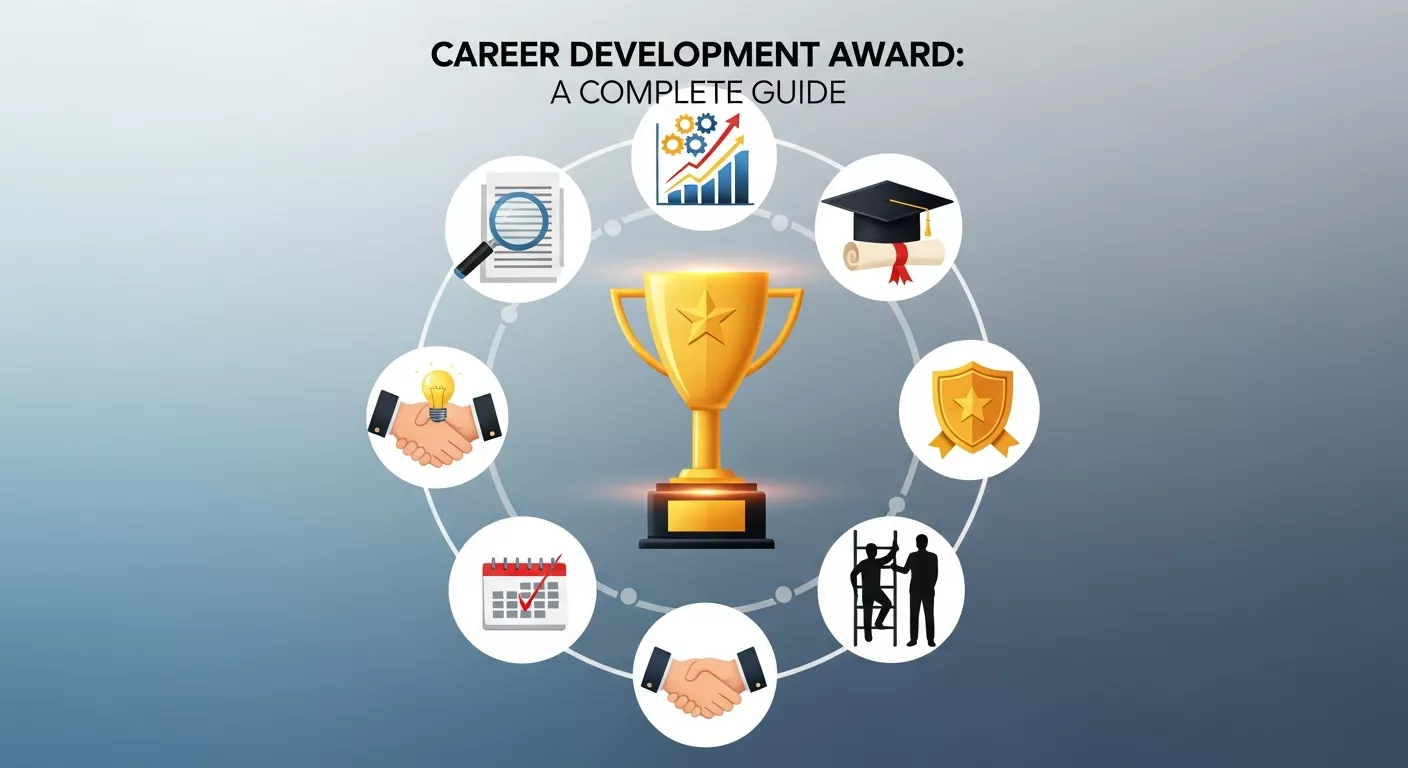
A Career Development Award provides funding, training, and mentorship to help individuals grow professionally. It supports skill development, research, and career advancement. This guide explains eligibility, benefits, application steps, and tips to improve success in securing the award.
A Career Development Award is one of the most valuable opportunities for people who want to grow professionally, strengthen their skills, and move forward in their chosen field. Whether you are a student preparing for a future career, a researcher hoping to build expertise, or a professional looking for advancement, this kind of award can provide the support needed to take the next step.
In today’s competitive world, talent alone is rarely enough. People also need training, guidance, funding, and access to opportunities that help them build experience and credibility. That is where a career development award becomes important. It is not just financial support. It is a structured pathway that helps individuals improve their knowledge, develop leadership skills, and achieve long-term career success.
What Is a Career Development Award?
A Career Development Award (CDA) is a funding or recognition program designed to help individuals improve their professional or academic career. These awards are usually offered by universities, government bodies, research institutions, non-profit organizations, and sometimes private foundations. The purpose is to support people who have clear potential but need structured resources to move ahead.
Unlike a scholarship, which usually focuses on academic study, a career development award is broader. It may support research, professional training, leadership development, specialized education, or career transition. The goal is to help recipients gain the knowledge and confidence they need to become stronger contributors in their field.
For many people, this award becomes a turning point. It can open doors to better jobs, new responsibilities, leadership positions, or advanced study. It may also help individuals connect with mentors and networks that support future success.
Why Career Development Awards Matter

Career development awards are important because they bridge the gap between potential and opportunity. Many people can succeed but lack the funding or support needed to take the next step. A CDA can provide that support and make career growth more achievable.
One of the biggest challenges people face is limited access to training or advanced learning. Some fields require specialized knowledge, while others value research experience, leadership ability, or practical skills. A career development award helps individuals build those strengths in a focused way.
These awards also encourage long-term planning. Instead of simply offering short-term financial help, they push recipients to think about their goals, their impact, and the kind of professional they want to become. This makes them especially valuable for people who are serious about growth.
Another reason they matter is that they can improve equality of opportunity. Not everyone has the same access to education, mentorship, or career resources. Career development awards can help reduce that gap by supporting talented individuals from different backgrounds.
Who Can Apply for a Career Development Award?
The eligibility for a career development award depends on the organization offering it. In general, these awards are open to a wide range of applicants, including students, early-career professionals, researchers, and people seeking advancement in a specific industry.
Students may apply when they need support for advanced study, research training, or professional preparation. Early-career professionals may apply if they want to strengthen their skills or move into a more specialized role. Researchers often use these awards to fund projects, gain experience, or develop independent work. Mid-career professionals may also qualify if the award is designed to support leadership development or career transition.
Some awards are highly specific. For example, they may target people in healthcare, education, science, engineering, business, public policy, or social development. Others are more general and open to applicants from multiple fields.
The most important thing is to read the instructions carefully. A strong candidate is not only someone with achievements, but also someone whose goals match the award’s purpose.
Typical Eligibility Criteria
Although every program is different, most career development awards look for a combination of academic background, professional experience, and future potential.
Applicants may be asked to have a degree in a relevant field. Some awards require a bachelor’s degree, while others are meant for master’s students, doctoral candidates, or professionals with years of experience. Certain programs also look at grades, publications, work history, or previous leadership roles.
Another common requirement is a clear career plan. The selection committee usually wants to see that the applicant has a realistic and meaningful vision for the future. They want to know how the award will help the person grow and how that growth will benefit the field or community.
Supporting documents often include a CV, transcripts, recommendation letters, a personal statement, and sometimes a project proposal. These documents help the committee judge not only what the applicant has done, but also what they plan to do next.
Types of Career Development Awards
Career development awards appear in many forms. Understanding the different types can help applicants identify the right opportunity.
Academic Career Development Awards
These are often aimed at students, researchers, or lecturers who want to advance in education or research. They may support study, research projects, conference attendance, or scholarly development.
Professional Career Development Awards
These are designed for people already working in a field who want to improve their expertise or move into a more advanced role. They may support certifications, training programs, workshops, or specialized courses.
Research Career Development Awards
These are especially common in science, medicine, social sciences, and technology. They help researchers build independent projects, publish findings, and develop leadership in research.
Leadership Development Awards
These programs focus on preparing individuals for management or leadership roles. They may include mentoring, executive training, or organizational development opportunities.
Industry-Specific Awards
Some awards are tailored to particular sectors such as healthcare, law, finance, education, or engineering. These awards often target people who want to gain advanced skills that directly apply to their profession.
Benefits of a Career Development Award
One of the reasons career development awards are so valuable is that their benefits go beyond money. They can shape a person’s professional identity and future direction.
Financial Support
The most obvious benefit is funding. Many recipients use the award to cover tuition, training, research, travel, or related professional expenses. This support can make opportunities possible that otherwise would have been out of reach.
Skill Building
Career development awards often include access to training, workshops, and practical experience. This helps recipients strengthen technical, academic, or leadership skills that are important in their field.
Career Progression
Being selected for a career development award can improve a person’s chances of getting hired, promoted, or invited into more advanced opportunities. It can serve as proof of promise and dedication.
Professional Recognition
Awards help build credibility. They show that experts or institutions recognize your potential, which can strengthen a resume, CV, or portfolio.
Networking
Many programs connect recipients with mentors, experts, and other participants. These connections can lead to collaborations, advice, and future opportunities.
Confidence and Motivation
Receiving an award can also be personally empowering. It can give people the confidence to pursue bigger goals and believe in their own ability to succeed.
How to Apply for a Career Development Award
Applying for a career development award requires careful planning. A strong application is usually the result of preparation rather than luck.
1. Research the Right Award
Start by identifying awards that fit your background and career goals. Not every award is suitable for every applicant. Some are for students, some for professionals, and some for researchers.
2. Read the Requirements Carefully
Before you begin, review the eligibility criteria, deadlines, required documents, and application instructions. Small mistakes can lead to automatic rejection.
3. Prepare Your Documents
Most applications will ask for some combination of the following: CV, transcripts, personal statement, recommendation letters, and possibly a research or project proposal.
4. Write a Strong Personal Statement
This is often the most important part of the application. It should explain your background, your goals, why you need the award, and how it will help you make a difference.
5. Ask for Strong References
Choose people who know your work well and can speak positively about your abilities, character, and potential. A weak recommendation can reduce the strength of an otherwise solid application.
6. Submit Before the Deadline
Leave time for review and revision. Submitting early gives you room to fix problems if needed.
How to Write a Strong Personal Statement

A personal statement can decide whether your application stands out or gets overlooked. It should be clear, honest, and focused.
Start by briefly explaining who you are and what stage of career development you are in. Then describe your academic or professional background. After that, explain your goals and why this award matters to your next step.
The best statements show a balance between ambition and realism. You do not need to claim that you will change the world overnight. Instead, show that you have a meaningful goal, a serious plan, and a genuine need for support.
It also helps to connect your goals to the award’s purpose. If the award supports leadership development, explain how you hope to become a stronger leader. If it supports research, explain the problem you want to study and why it matters.
A good statement should sound specific. Avoid generic lines that could apply to anyone. The more personal and relevant it is, the stronger it becomes.
Common Mistakes to Avoid
Many applicants lose opportunities because of avoidable errors. One common mistake is failing to read the guidelines carefully. Another is submitting incomplete documents or missing the deadline. Some applicants also write vague personal statements that do not explain their goals clearly.
Another problem is choosing the wrong award. If your background does not match the purpose of the program, your application may not be competitive. This is why it is important to match your experience and ambitions with the award’s focus.
Some people also underestimate the value of proofreading. Grammar mistakes, confusing sentences, or sloppy formatting can create a poor impression. A strong application should look professional and polished.
Finally, many applicants fail to show impact. It is not enough to say that you want support. You should also explain what you will do with it and how it will help your career, field, or community.
Career Development Award vs Scholarship
People sometimes confuse a career development award with a scholarship, but they are not the same.
A scholarship usually helps pay for education. It is often based on academic achievement, financial need, or both. It is commonly used by students who are trying to complete a degree.
A career development award is broader. It may support education, but it usually focuses on professional growth, research development, leadership training, or career advancement. It is not limited to students and may also be available to professionals and researchers.
In simple terms, a scholarship helps you study, while a career development award helps you grow your career.
Examples of Fields That Offer Career Development Awards
Career development awards are found in many industries. Healthcare is one of the most common fields, especially for doctors, nurses, and public health researchers. These awards often help people build advanced clinical or research expertise.
Education is another major area. Teachers, lecturers, and education researchers may receive funding to improve their teaching methods, leadership skills, or academic contributions.
Technology and engineering also offer many career development opportunities. These may help people learn new technical systems, conduct innovation projects, or move into specialized roles.
Business, finance, and public administration also use career development awards to train future leaders. In these fields, the focus is often on strategy, management, and organizational growth.
Why Employers and Institutions Value Career Development Awards
Employers often see a career development award as a sign of dedication, discipline, and potential. It suggests that the person is serious about learning and growth. For institutions, this can be a strong indicator of future contribution.
Such awards can also help build a stronger professional reputation. Recipients may be seen as more competitive, more motivated, and more likely to take initiative. In many cases, this improves opportunities for promotions, collaborations, and leadership roles.
For researchers and academics, the award may also lead to publications, conference presentations, or grants. These outcomes can create a long-lasting impact on a career.
Tips to Increase Your Chances of Winning
If you are planning to apply for a career development award, a few practical steps can improve your chances.
First, choose awards that fit your goals closely. The better the match, the stronger your application will be. Second, show a clear direction. Committees like applicants who know what they want to do and how the award fits into their path.
Third, make your application easy to read. Use simple language, organize your ideas clearly, and avoid unnecessary details. Fourth, give examples of your achievements rather than only making broad claims. Specific examples are more convincing.
Fifth, ask someone you trust to review your application before you submit it. A second opinion can help you catch mistakes and improve clarity.
The Long-Term Impact of a Career Development Award

The value of a career development award does not end when the funding is used. In many cases, the award creates long-term change.
For the individual, it may lead to stronger credentials, better opportunities, and greater confidence. For the employer or institution, it may produce a more skilled and capable professional. For the field as a whole, it can contribute to innovation, improved services, and better leadership.
Some recipients use the award to launch a major career shift. Others use it to deepen their expertise in the same field. In either case, the award can be a meaningful step toward greater professional maturity.
Final Thoughts
A Career Development Award is more than a funding opportunity. It is a chance to grow, specialize, and move forward with purpose. Whether you are a student, researcher, or professional, the right award can help you gain skills, build confidence, and reach the next stage of your career.
The key to success is preparation. When you understand the purpose of the award, match your goals carefully, and present a strong application, you give yourself a much better chance of standing out.
If you are serious about long-term growth, career development awards can be one of the most useful tools available. They support ambition, reward potential, and help people turn their career goals into reality.


Leave a Reply